
Resources
Tools and guidance to help Jewish leaders and institutions learn, lead, and act for democracy.
Featured Resource
American Jewish Civics: A comprehensive initiative exploring how Jewish teachings and civic education can strengthen American democracy. American Jewish Civics offers a values-based framework, foundational materials, deep dives and tools, grounded in Jewish tradition and contemporary civic challenges, to help educators, clergy, and community leaders cultivate the knowledge, skills, and habits that democratic life depends on.
What Is? Series
In Part 2, we turn to the threats testing election security right now, and why recognizing them clearly, without exaggeration or partisan spin, matters for keeping our elections free and fair.
Election security refers to the people, systems, and processes that protect the integrity of elections, from voter registration databases and voting equipment to ballot counting, certification, and public confidence in the results.
A Super PAC, formally known as an independent-expenditure-only committee, is a type of political organization that can raise and spend unlimited sums of money from individuals, corporations, unions and other groups to influence elections. The one legal restriction is that they may not donate directly to a candidate's campaign or coordinate strategy with the candidates they support.
Democracy Resources

In this white paper, we make the case for sustained engagement to preserve this fragile and imperative system of self-governance.

As Jewish clergy, we hold trusted moral authority in our communities. That power is sacred — it comes from our ability to speak to shared values, not partisan identities. Recent IRS changes have weakened enforcement of the Johnson Amendment, which for decades prohibited religious institutions from endorsing political candidates. In this new environment, rabbis and cantors may feel pressure to bring partisanship to the pulpit.

As politicized efforts grow to intimidate, investigate, or revoke the tax-exempt status of mission-driven nonprofits, Jewish leaders must protect our own and stand up for our partners. This one-pager outlines five key things Jewish 501(c)(3)s must know to safeguard themselves — and the civic space we all rely on.
Insights from the Field

This year, as Rosh Hashanah and 9/11 coincide, I’m supplementing my ordinary cheshbon hanefesh with some very particular questions: Where have I stayed quiet when my voice could have mattered? Where has frustration become an excuse for disengagement? Where have I assumed someone else would do the work of protecting what we all depend on?
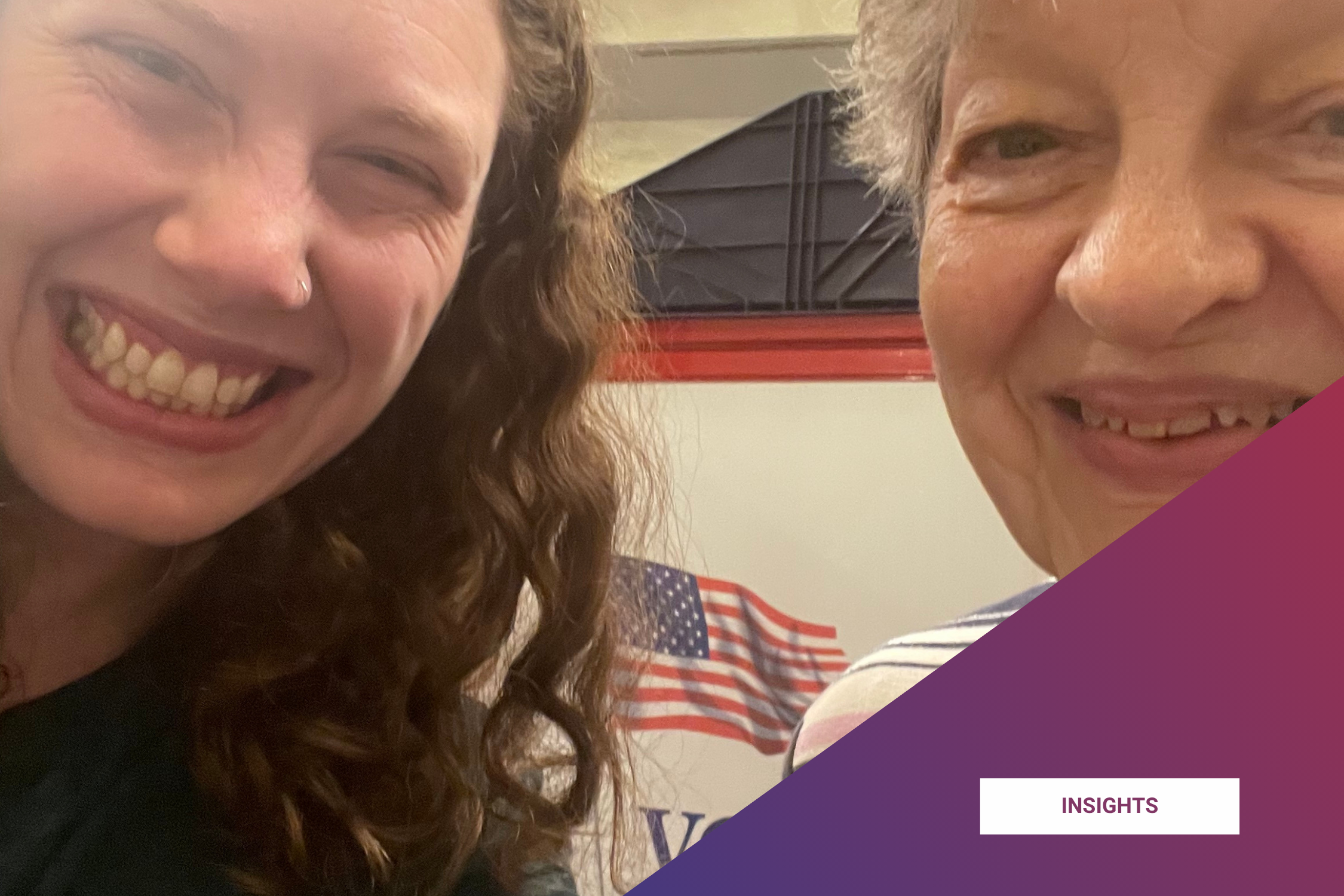
When I joined the staff at A More Perfect Union this year, one of the first things I did was fill out a poll worker application. Our organization offers paid time off for election administration, and I wanted to take advantage of it. I had no idea it would become one of the most meaningful experiences of my year, or that it would genuinely restore my faith in our democratic process.
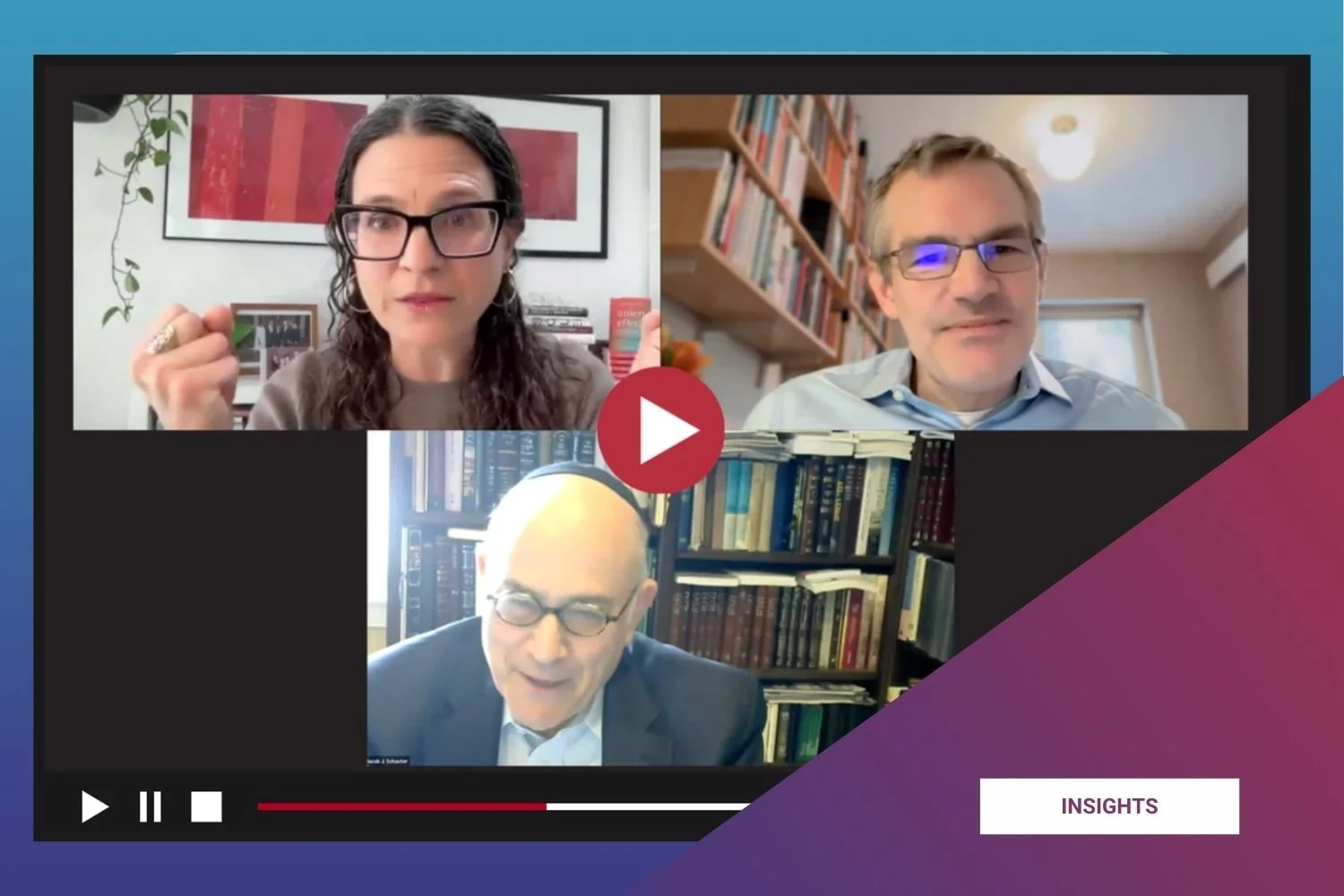
Where can we find joy, kindness, and hope in democracy — especially in difficult times? In this conversation, Aaron Dorfman, Founder and Executive Director of A More Perfect Union, speaks with the esteemed Rabbi Sharon Brous of IKAR and Rabbi Jacob J. Schacter of Yeshiva University about what 250 years of Jewish life in America can teach us about democracy today. Together they reflect on the freedoms American democracy has made possible for Jewish communities — and the responsibilities that come with them. Drawing on Jewish teachings about human dignity, responsibility, and compassion, they explore a deeper truth: democracy is sustained not only by institutions or elections, but by how we treat one another. Sometimes the most powerful civic act is choosing hope, courage, and kindness. Topics discussed: Jewish values, democracy, civic responsibility, kindness, rule of law, American Jewish history, polarization, coalition building.
Partner Spotlights
Every April, the National Council of Jewish Women Bergen County Section (NCJW BCS) hosts an Advocacy Forum that brings community members together around one of today's most pressing civic issues. This year, the organization focused on a cornerstone of American democracy: freedom of the press. “Freedom of the Press: News, Noise & Facts” brought in more than 100 attendees. The event convened four respected journalists, with a panel featuring Stephanie Murray of Montclair State University’s Center for Cooperative Media, Arno Rosenfeld of The Forward, Briana Vannozzi of PBS’s NJ Spotlight News, and veteran television producer and documentarian Allison Davis.
Civic Spirit Days reimagine field trips as student journeys through American democracy, history, and responsibility. In New York City, high school students gathered at the New York Historical, where they explored founding-era artifacts and documents. Participants shared personal objects reflecting family histories, and worked in teams to design interactive projects about the American story.
100 Women on the Move brings women of different backgrounds and faith communities to learn and organize on issues affecting Milwaukee.