
Rosh Hashanah, 9/11, and an accounting of our democracy
This year, as Rosh Hashanah and 9/11 coincide, I’m supplementing my ordinary cheshbon hanefesh with some very particular questions: Where have I stayed quiet when my voice could have mattered? Where has frustration become an excuse for disengagement? Where have I assumed someone else would do the work of protecting what we all depend on?
What is Election Security? (Part 2)
In Part 2, we turn to the threats testing election security right now, and why recognizing them clearly, without exaggeration or partisan spin, matters for keeping our elections free and fair.
Partner Spotlight: National Council of Jewish Women Bergen County Section
Every April, the National Council of Jewish Women Bergen County Section (NCJW BCS) hosts an Advocacy Forum that brings community members together around one of today's most pressing civic issues. This year, the organization focused on a cornerstone of American democracy: freedom of the press. “Freedom of the Press: News, Noise & Facts” brought in more than 100 attendees. The event convened four respected journalists, with a panel featuring Stephanie Murray of Montclair State University’s Center for Cooperative Media, Arno Rosenfeld of The Forward, Briana Vannozzi of PBS’s NJ Spotlight News, and veteran television producer and documentarian Allison Davis.
What is Election Security? (Part 1)
Election security refers to the people, systems, and processes that protect the integrity of elections, from voter registration databases and voting equipment to ballot counting, certification, and public confidence in the results.
Partner Spotlight: Civic Spirit
Civic Spirit Days reimagine field trips as student journeys through American democracy, history, and responsibility. In New York City, high school students gathered at the New York Historical, where they explored founding-era artifacts and documents. Participants shared personal objects reflecting family histories, and worked in teams to design interactive projects about the American story.
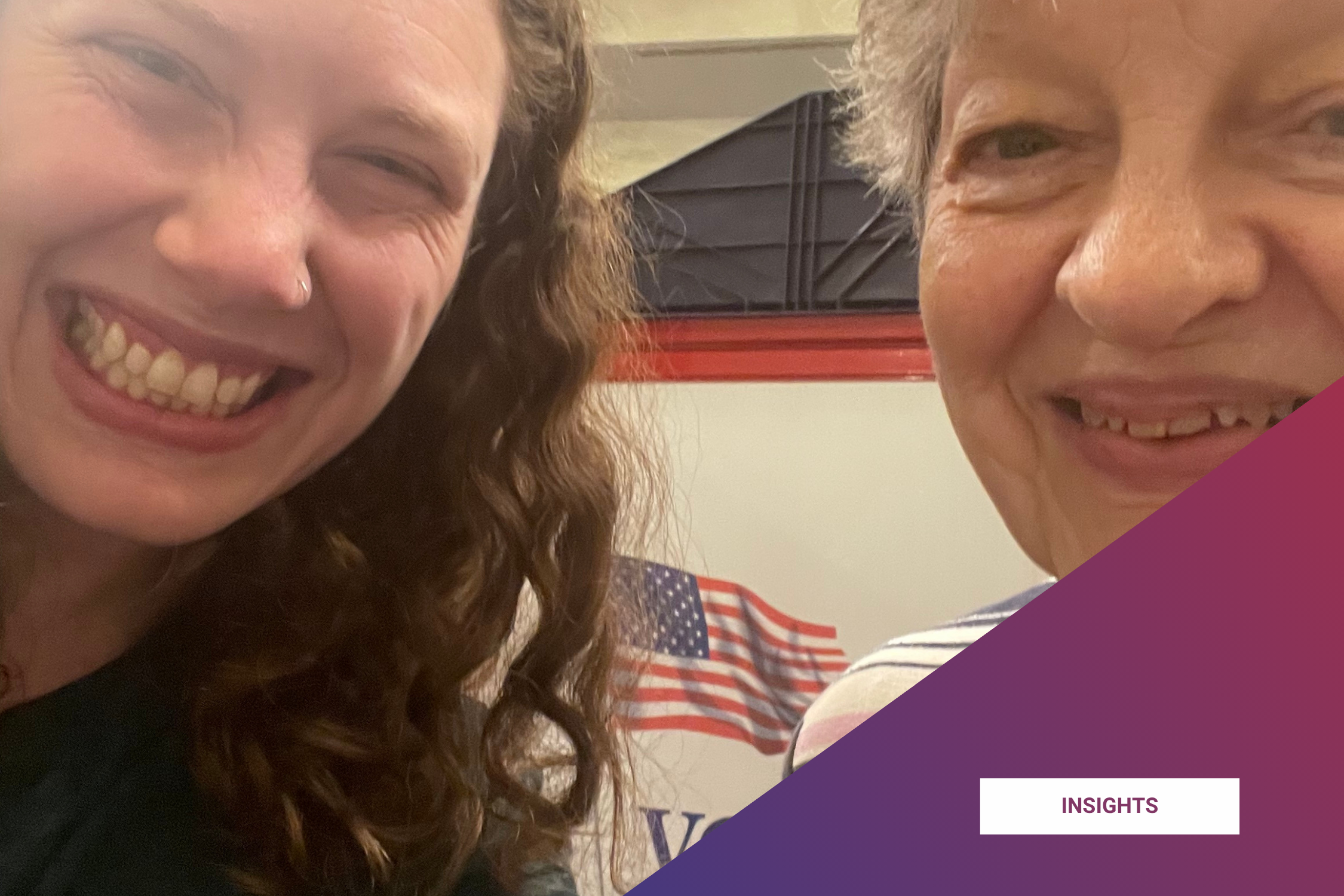
What 15 Hours at a Polling Place Taught Me About Democracy
When I joined the staff at A More Perfect Union this year, one of the first things I did was fill out a poll worker application. Our organization offers paid time off for election administration, and I wanted to take advantage of it. I had no idea it would become one of the most meaningful experiences of my year, or that it would genuinely restore my faith in our democratic process.
Partner Spotlight: Tikkun Ha-Ir
100 Women on the Move brings women of different backgrounds and faith communities to learn and organize on issues affecting Milwaukee.
What are Super PACs, and why are they reshaping primary elections?
A Super PAC, formally known as an independent-expenditure-only committee, is a type of political organization that can raise and spend unlimited sums of money from individuals, corporations, unions and other groups to influence elections. The one legal restriction is that they may not donate directly to a candidate's campaign or coordinate strategy with the candidates they support.
What is redistricting?
Last month, Virginia voters approved an effort to redraw the state's congressional map in an attempt to help Democrats flip multiple Republican-held districts—a move that was struck down a few weeks later by the Virginia Supreme Court. This was a high-profile escalation in an ongoing partisan battle between Democrats and Republicans, in which at least 17 states have attempted to weaken their opponents' political power over the last two years.
These events reflect a broader national debate over voting rights, representation, how much power elected officials should have in shaping the electorate that determines their own elections, and what U.S. law actually says about it.
Partner Spotlight: NCJW Pittsburgh
This spring, NCJW Pittsburgh helped more than 100 Pittsburgh-area high school students cast their first ballots through its first Youth Vote Block Party. Newly eligible voters were able to complete and submit mail-in ballots at an official satellite voting location before joining a downtown block party featuring music, food, student speakers, elected officials, and community organizations.
What is Civil Society? (Part 2)
A recent ruling in EEOC v. University of Pennsylvania highlights a growing tension at the heart of civil society: how to investigate antisemitism and hold institutions accountable without infringing on constitutional protections around religious identity and association.
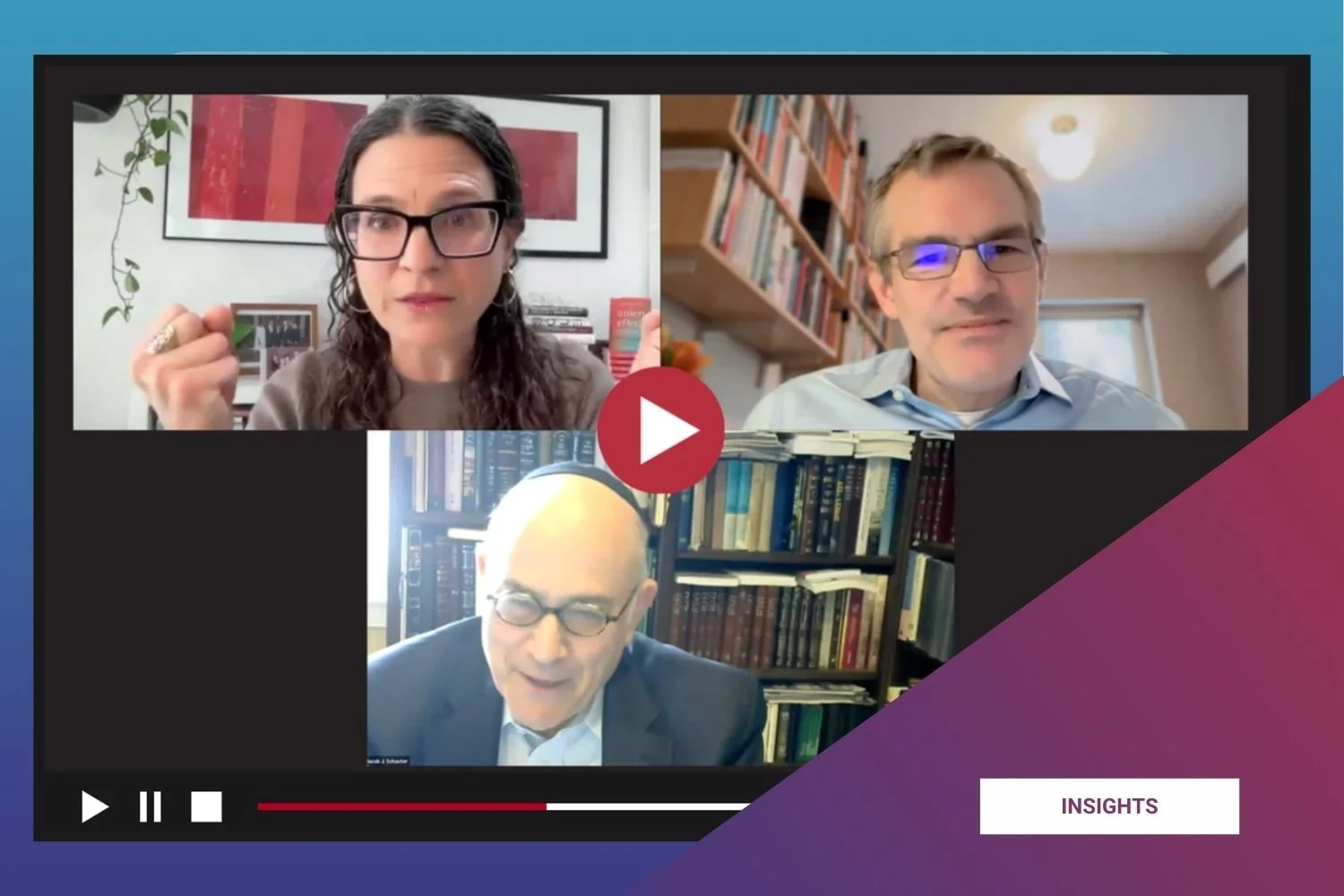
What Jewish Wisdom Teaches Us About Democracy — and Kindness
Where can we find joy, kindness, and hope in democracy — especially in difficult times? In this conversation, Aaron Dorfman, Founder and Executive Director of A More Perfect Union, speaks with the esteemed Rabbi Sharon Brous of IKAR and Rabbi Jacob J. Schacter of Yeshiva University about what 250 years of Jewish life in America can teach us about democracy today. Together they reflect on the freedoms American democracy has made possible for Jewish communities — and the responsibilities that come with them. Drawing on Jewish teachings about human dignity, responsibility, and compassion, they explore a deeper truth: democracy is sustained not only by institutions or elections, but by how we treat one another. Sometimes the most powerful civic act is choosing hope, courage, and kindness. Topics discussed: Jewish values, democracy, civic responsibility, kindness, rule of law, American Jewish history, polarization, coalition building.
What are the president’s war powers?
Recent debate about U.S. military action against Iran has raised questions about what authority a president has to launch military operations. The U.S. Constitution divides war powers between Congress and the president, creating a system of shared responsibility intended to prevent unilateral decisions about war.
Partner Spotlight: JCC of Greater Pittsburgh Center for Loving Kindness and Civic Engagement
What does it look like when a JCC makes civic belonging part of everyday life? The JCC of Greater Pittsburgh’s Center for Loving Kindness and Civic Engagement explores this question every day. Grounded in shared values and created to help communities navigate moments of tension and disagreement, the Center turns everyday encounters into opportunities for dialogue, empathy, and connection across differences.
What is our state-based election system?
Recent public statements have raised questions about who controls American elections and whether election administration should be more centralized at the national level. Under the U.S. Constitution, the primary responsibility for running elections belongs to the states. State and local officials oversee voter registration, ballot design, polling locations, vote counting, audits, and certification of results.
What is at risk for democracy in Minnesota?
Over the past several weeks, federal immigration enforcement actions in Minneapolis have resulted in the deaths of two people and raised serious questions about due process, accountability, and constitutional protections.
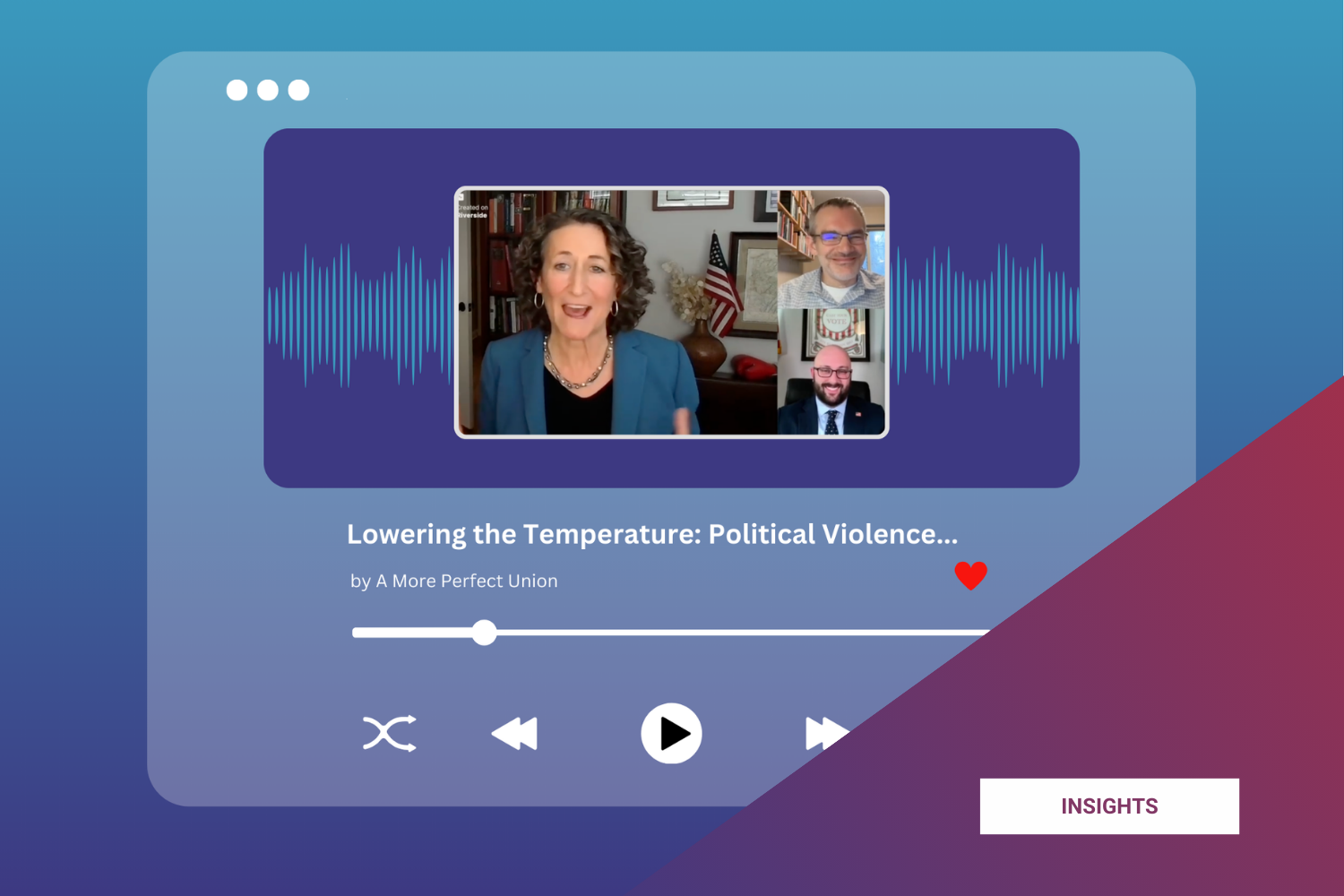
Lowering the Temperature: Political Violence, Antisemitism, and Democracy
Political violence is becoming more visible – and, in some spaces, more normalized. In this conversation, A More Perfect Union Executive Director Aaron Dorfman speaks with former Pennsylvania Secretary of State Kathy Boockvar and Philadelphia City Commissioner Seth Bluestein about what’s driving this moment, how antisemitism intersects with political extremism, and why civic leadership requires a clear rejection of violence.
What is the Insurrection Act?
While U.S. law generally prohibits the use of the military for domestic policing, the Insurrection Act is a federal law that gives the President of the United States the authority to deploy the U.S. military or federalized National Guard inside the country under certain circumstances.

The Jewish Imperative to Protect and Strengthen American Democracy
In this white paper, we make the case for sustained engagement to preserve this fragile and imperative system of self-governance.

What is the National Guard deployment (and other domestic uses of the military)?
Recent deployments of the National Guard reflect a growing trend: the use — or threatened use — of federal military power in domestic situations that have traditionally fallen under local or state control.